

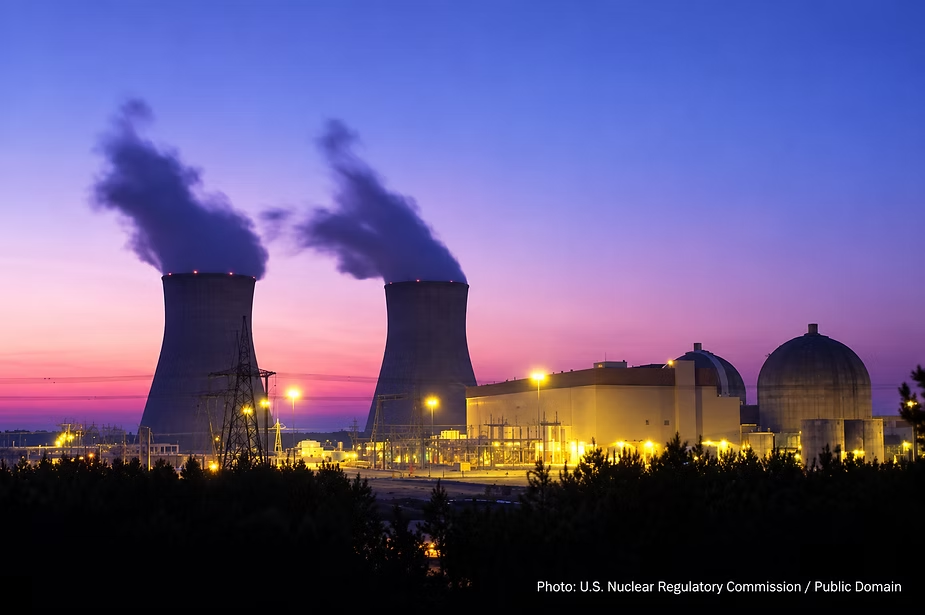
In 2009, Georgia Power asked regulators to approve two AP1000 reactors at Plant Vogtle, a standardized design that used modular construction to make the build simpler and more repeatable. The units were expected to cost about $14 billion and be running by 2016 and 2017.
They entered service roughly seven years late at more than $30 billion. The causes cited include first-of-a-kind learning, an immature supply chain and workforce, Westinghouse’s bankruptcy and the pandemic.
So when the Department of Energy conditionally committed $17.5 billion in June for long-lead parts on up to ten more AP1000s, the number I cared about was the ten. ⚛️
Vogtle already had a standardized reactor design, but standardization alone wasn’t enough. What a fleet adds is the chance to build the same thing again with the people who built the last one, and to get better each time.
We tend to treat major projects as temporary organizations. We assemble the team, build the asset, write up the lessons learned and send everybody somewhere else. Five or ten years later, another organization assembles another team to build something similar and wonders why so much of the learning disappeared.
You’ve probably seen the artifact: a lessons-learned file on a shared drive, last opened the week it was written by people now on three other programs.
Repetition works because the engineers have solved more of the problems before, suppliers know what is coming and when, crews know the sequence, and estimates start to carry production history instead of assumptions. People spend less of the job learning how to do the job.
The capability that makes the next reactor cheaper sits in the people, suppliers, routines and relationships that built the last one.
But ten identical reactors are not automatically a ten-reactor learning curve. Spread them across different owners and sites, and much of that capability can still disappear between builds because nobody budgeted to keep it together.
On a fleet program, I would treat continuity between builds as part of the project: keep a core delivery team together, give key suppliers visibility into the next order, move experienced commissioning people straight onto the next unit, and carry actual production rates into the next estimate.
If that continuity holds, the tenth reactor should be cheaper and easier to build than the first. If it doesn’t, ten standardized reactors may turn into five separate two-unit learning curves.
Whether this works will show how much performance comes from the design and how much from keeping a delivery system together long enough to learn. On your last multi-site program, did the second site get the first site’s commissioning team, or just its lessons-learned file?