

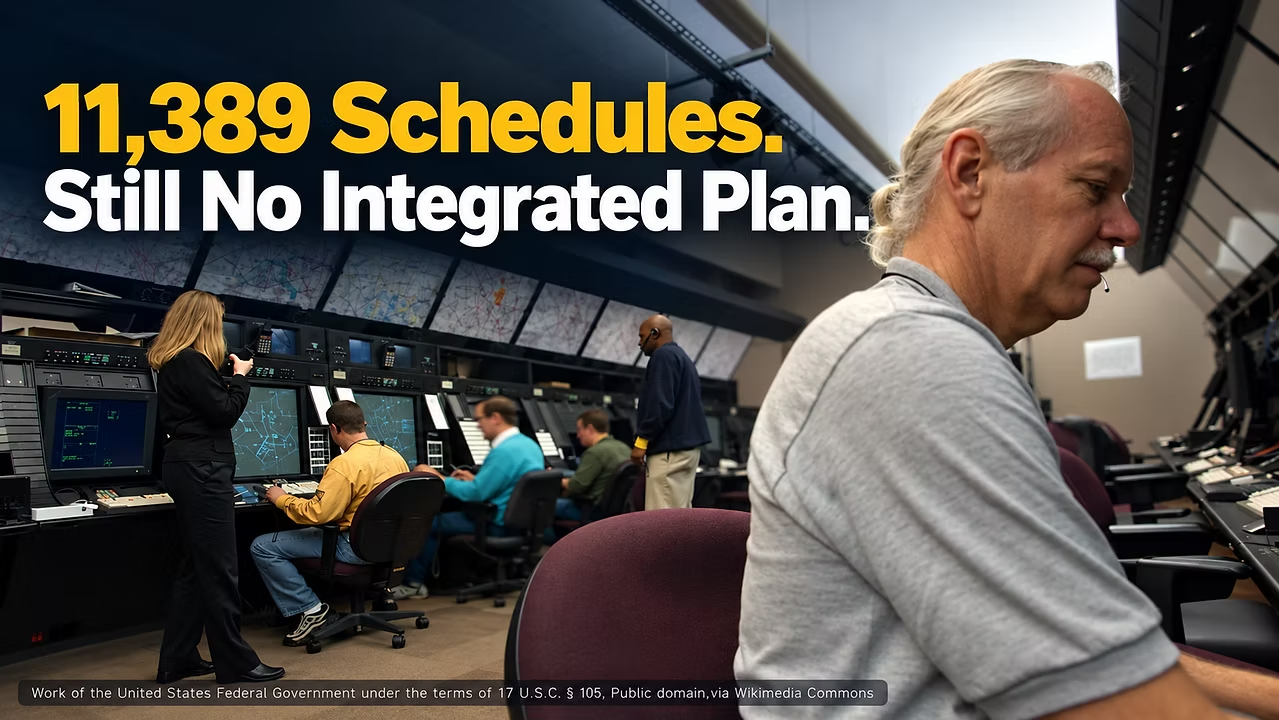
The FAA has 11,389 project schedules for the first phase of its air traffic control modernization. What it does not yet have is one integrated schedule.
The number comes from a GAO review released this month. The modernization is also happening while the existing air traffic control system still has to operate every day. On Monday, a failed primary communications circuit and a severed backup fibre line disrupted thousands of flights, with arrivals halted for hours at major East Coast airports.
You cannot shut the system down for two years, rebuild it properly and turn it back on. Controllers still need the old equipment while teams replace it, so every installation has to fit around a live operation. Every failure creates pressure to accelerate the replacement, and acceleration usually means more work happening at the same time.
I have seen the smaller version of this on troubled programs more than once. A project slips badly enough that senior management gets involved, more people arrive, dates are pulled forward and each workstream is asked to recover its part. Most of those plans look reasonable when you review them individually.
The problems appear when you put them together.
Three teams need the same environment in the same week. Operations cannot release an asset when the project expected it. A dependency that was manageable when the work was sequential becomes critical once everything moves into parallel, and a specialist who appeared to have capacity is suddenly on the critical path for four different workstreams.
Six weeks later, the recovery plan is slipping too.
When a project goes red, the instinct is to make it move faster before the team has established what can actually move.
A useful recovery plan starts with a less exciting set of questions. What absolutely has to keep operating? Which failures are creating the immediate damage? What work can stop without making the outcome worse? Where are several teams assuming they can have the same people, systems, facilities or decisions at the same time?
Then I would want one view of the work that shows those collisions. Eleven thousand schedules can show that every piece of work has a plan without showing which piece has to happen first or which constraint actually owns the date.
Moving dates does not create capacity, and adding people does not remove the interfaces between them, which is why a recovery plan built on both usually slips again.
The FAA has a much bigger and more complicated problem than most of us will ever run, but the recovery problem underneath it is familiar. You have to keep today working while you build tomorrow, without letting the pressure created by today’s failures make tomorrow’s plan less credible.
On the last troubled project you worked on, what did the recovery team do first? 🤔
Reuters report: https://lnkd.in/ej5kqNHg