

Chinese refiners have a supply problem this week. A pipeline from Alberta is already part of the answer.
Reuters reports that Chinese independent refiners have bought more than 20 million barrels from Canada, West Africa and South America as supplies from Iran and Russia become harder to secure. Canadian heavy crude moving through Trans Mountain is part of that buying wave.
Most of the case for diversifying Canada’s oil exports is about us: what happens if our largest customer changes the terms? It is a fair question, and it has carried much of the debate for years.
But this week points to the other half of it.
Another route gives you options when your main buyer changes the terms. It also lets you respond when a buyer elsewhere loses access to its usual suppliers.
One buying wave does not settle the economics of a pipeline, but it does show a kind of value that an average-year forecast can leave out.
Construction costs and normal-year volumes are the easy numbers. What’s harder to price is what access becomes worth the week a regular supply chain breaks.
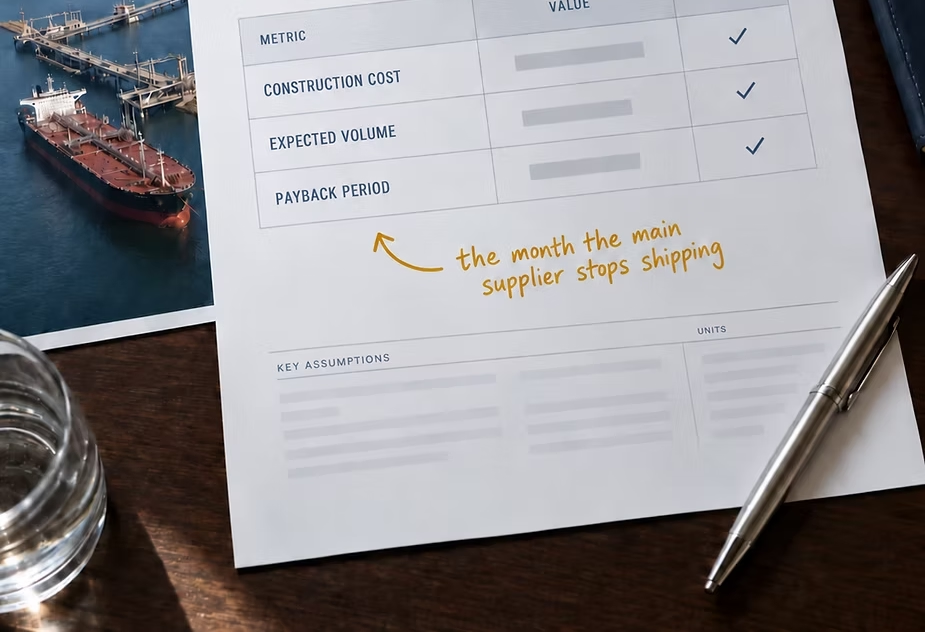
The same question sits inside a company as much as it sits inside a pipeline’s business case. It shows up every quarter in smaller rooms. Someone asks for a second supplier, and the first question is about the payback period. The spreadsheet has a column for cost and a column for expected volume, but no row at all for the month the main supplier stops shipping.
The proposed option might be a backup supplier that can ship when the usual one can’t, or a second channel that can reach customers whose own supplier has gone dark. Each option costs money and needs a case that survives budget season. But if you build that case only against today’s demand and today’s reliable suppliers, you leave part of its value out.
Name the disruption you think is plausible and put a number on what a month of it would cost you. Weigh that against the cost of keeping the alternative available. It will not be precise, but it beats leaving the row blank.
The companies able to respond today are benefiting from an option built before it was urgently needed. The ones scrambling for a workaround are discovering what waiting costs.
What’s a second option your business built before you needed it, and what would it have cost if you had waited?